

Shoppers make split-second judgments about online stores, and product images are almost always what tips the decision. Strong ecommerce product photography builds the kind of visual trust that written descriptions simply cannot replicate, directly influencing how long visitors stay on a page and whether they buy.
Sellers who invest in high-quality visuals consistently see higher engagement, lower return rates, and stronger conversion numbers. Caspa makes that standard achievable for any online store through AI-powered product photography that delivers professional results without the cost or complexity of a traditional shoot.
Table of Contents
- Why Ecommerce Product Imagery Matters More Than Ever
- What Is Ecommerce Product Imagery?
- 8 Types of Ecommerce Product Imagery Every Brand Should Use
- Common Ecommerce Product Imagery Mistakes That Reduce Sales
- 7 Best Practices for Creating High-Converting Ecommerce Product Imagery
- How Caspa Helps Ecommerce Brands Create Better Product Imagery at Scale
- Get Product Photos that Increase Your Sales Today
Summary
- Visual quality is the primary driver of online purchase decisions, not product descriptions or pricing. According to research cited by LetsEnhance, 93% of consumers consider visual appearance the key deciding factor in a purchasing decision. For online sellers, this means photography is not a support function but a core commercial input.
- Returns are a direct indicator of how well product imagery is performing. Research from UXmatters found that 22% of product returns happen because the item looked different in photos than it did in real life. Inaccurate color rendering, misleading scale, and over-edited images that distort texture all contribute to this gap, and each return represents a margin loss, a logistics cost, and a potential permanent loss of that customer.
- Poor product images are a leading cause of cart abandonment, and the damage is largely invisible to sellers. Zeelum reports that 67% of consumers cite poor product images as a major reason for not completing a purchase. The friction is rarely dramatic; it is a blurry thumbnail, an off-color rendering, or a single flat image where a shopper needed five.
- Different image types serve distinct functions at different stages of the buying journey. During discovery, a thumbnail determines whether someone clicks or scrolls past. During evaluation, multiple angles, close-ups, and lifestyle images answer questions that would otherwise send a shopper to a competitor. Near the point of purchase, visual completeness reduces hesitation. Each format handles a specific question, and brands that deploy all of them consistently outperform those that rely on a single image type.
- Visual consistency across a product catalog functions as a trust signal, not just a design preference. When listings vary in background treatment, lighting temperature, and image cropping, shoppers unconsciously question whether they are browsing a credible store. This problem compounds as catalogs grow, since products shot at different times by different photographers under different briefs rarely align visually.
- The ecommerce product photography market was valued at approximately USD 3.2 billion in 2024 and is projected to reach USD 12.4 billion by 2033, according to Data Horizzon Research. That growth reflects the measurable connection between image quality and conversion rates and signals that brands across every category are treating visual content as a serious commercial investment rather than a production expense.
- Product photography addresses this by giving ecommerce teams a way to maintain consistent, conversion-ready visuals across an entire catalog without relying on production timelines that slow down every new product launch.
Why Ecommerce Product Imagery Matters More Than Ever
Online shoppers cannot touch, hold, or test products, placing enormous pressure on one thing: what your product looks like on screen. Without physical interaction, every visual detail becomes critical: lighting, angle, texture, and scale. Our product photography solutions ensure your visuals make the critical first impression that copy cannot replace.
"Online shoppers cannot touch, hold, or test products, which means what your product looks like on screen is everything." Caspa AI
🎯 Key Point: In ecommerce, your product image is your storefront. It's the primary sales tool, not a supporting element.

When a customer lands on a product page, they ask quick, subconscious questions: Does this look real? Does it match what I need? Can I trust this brand? Product imagery answers all of these before a single word of copy is read. According to LetsEnhance, 93% of consumers think visual appearance is the key deciding factor in a purchasing decision: that is not a preference; that is a business requirement.
| Customer Question | What Answers It |
|---|---|
| Does this look real? | High-resolution, accurate imagery |
| Does it match what I need? | Multiple angles & context shots |
| Can I trust this brand? | Consistent, professional visual style |
🔑 Takeaway: 93% of purchasing decisions are influenced by visual appearance, meaning weak imagery directly costs you sales, no matter how strong your pricing or copy may be.
⚠️ Warning: Underinvesting in product photography isn't a minor oversight. It's one of the highest-impact conversion killers in ecommerce.
Why do weak product images stop sales before they start?
The failure point is usually not product quality but lack of visual proof. Newer ecommerce sellers often pour budget into paid advertising while treating product photography as an afterthought. Traffic arrives, but the page fails to convert because images are flat, inconsistently lit, or shot against cluttered backgrounds. Shoppers notice the gap between effort and presentation and leave.
Most sellers rely on manufacturer images or smartphone shots as a starting point. As catalogs grow and competition intensifies, this approach creates a performance ceiling: inconsistent product photos hurt brand credibility. Platforms like Caspa generate ultra-realistic product images, lifestyle visuals, and platform-specific content, such as Amazon A+ pages, at scale, enabling sellers to maintain visual consistency across every listing without the need for a studio or photographer.
How does poor imagery drive up returns and erode margins?
Returns are equally important. Research from UXmatters found that 22% of product returns happen because items look different in person than in product images. Every return costs lost profit, shipping expenses, and customer trust. Accurate, high-quality images protect the sale after the package arrives. Ecommerce has become more visual. Shoppers move easily between product detail pages, social commerce feeds, and marketplace listings, comparing options across multiple tabs in seconds. Product photography quality serves as your brand's first impression, credibility signal, and competitive edge in a single image.
Related Reading
- Ecommerce Product Photography
- AI Tools for E-commerce
- Printify Alternatives
- Photoroom Pricing
- Ecommerce Product Photography Services
- E-commerce AI Tools
- Printful Alternatives
- Best AI Tools for E-commerce
What Is Ecommerce Product Imagery?
Ecommerce product imagery is every visual asset a brand uses to show, explain, and sell a product online. It covers standard white-background shots, lifestyle photos, close-up detail images, product videos, 360-degree views, and comparison graphics. These assets replace what a customer would normally do in a physical store: pick up the product, inspect the stitching, test the weight, read the label.
"These assets replace what a customer would normally do in a physical store: pick up the product, inspect the stitching, test the weight, read the label."
| Image Type | What It Replaces In-Store |
|---|---|
| White-background shot | Seeing the product clearly on a shelf |
| Lifestyle photo | Imagine the product in your life |
| Close-up detail image | Inspecting stitching, texture, or finish |
| 360-degree view | Turning the product over in your hands |
| Comparison graphic | Asking a sales associate about differences |
🎯 Key Point: Ecommerce product imagery is not just decoration. It is the primary selling tool that stands in for the entire in-store physical experience.

Without the ability to touch or try a product, shoppers rely entirely on what they can see to answer questions about quality, scale, material, and fit. A well-constructed product image serves as a knowledgeable sales associate: it anticipates customer questions before they're asked.
💡 Tip: Think of every product image as a silent salesperson. It must answer objections, build trust, and close the sale without human interaction.
Why does the type of imagery used matter so much?
According to Electro IQ's Product Photography Statistics, 95.6% of ecommerce brands use model photography for product images. A jacket on a hanger displays the fabric; on a person, it reveals proportion, movement, and lifestyle. That gap determines whether customers buy. Traditional photography (hiring a photographer, booking a studio, briefing a stylist, waiting for edits) produces high-quality results but entails invoices, timelines, and logistical challenges that compound across dozens of SKUs or platform-specific content needs. Platforms like Caspa address this directly, generating ultra-realistic product images, lifestyle scenes, and infographics with AI models across diverse ethnicities, compressing what once took weeks into a workflow measured in minutes.
How big is the ecommerce product imagery market?
Data Horizzon Research's Ecommerce Product Photography Market Report valued the ecommerce product photography market at USD 3.2 billion in 2024, with projections reaching USD 12.4 billion by 2033. This growth is driven by the connection between image quality and conversion rates.
How does product imagery work at each stage of the buyer journey?
Product images work differently depending on where a buyer is in their shopping journey. During the discovery stage, a single small image decides whether a shopper clicks or scrolls past. During the evaluation stage, multiple angles, detail shots, and lifestyle images answer questions that might otherwise send a customer to a competitor. Near the point of purchase, complete visual information reduces doubt. Each image type serves a specific purpose, and knowing which job each performs separates brands that make sales from those that merely list products.
8 Types of Ecommerce Product Imagery Every Brand Should Use
Each visual format solves a different problem in the buying journey. Brands that convert consistently use the right image type at the right time, because no single image style can do all the heavy lifting across every stage of the customer decision process.
"Brands that convert consistently use the right image type at the right time, matching visual format to buyer intent is the difference between browsing and buying."
| Image Type | Problem It Solves | Stage in Buying Journey |
|---|---|---|
| Hero/Lifestyle Shots | Lack of emotional connection | Awareness |
| White Background Product | Unclear product details | Consideration |
| 360° / Multi-Angle Views | Uncertainty about form & fit | Consideration |
| Scale/Context Images | Poor sense of size | Evaluation |
| Detail/Texture Close-Ups | Doubt about quality | Evaluation |
| UGC & Social Proof | Trust deficit | Decision |
| Infographic/Feature Callouts | Feature confusion | Decision |
| Video Thumbnails/GIFs | Static imagery fatigue | Conversion |
💡 Tip: Map each image type to a specific buyer question, the more precisely your visuals answer "Will this work for me?", the higher your conversion rate will climb.
🎯 Key Point: Visual strategy isn't about having more images. It's about having the right images for the right moment in the customer journey.
✅ Best Practice: Audit your product pages against this table and identify which buying journey stages are underserved by your current imagery. Those gaps are your biggest conversion opportunities.

1. Standard Product Photos
Standard product photos are the foundation. A clean background, accurate color representation, and sharp focus give shoppers an immediate, clear understanding of what they're buying. According to Shift4Shop, 75% of online shoppers rely on product photos when deciding on a purchase, making this the critical first job your visuals must accomplish.
2. Multiple Product Angles
A single front-facing shot leaves questions unanswered. Showing a product from the back, sides, top, and detail angles mimics the physical act of picking something up and turning it over in your hands. Customers who can fully examine a product are less likely to be surprised upon arrival, reducing returns.
3. Lifestyle Photography
Lifestyle photography sells the outcome, not the object. A kitchen knife on a white background shows what it looks like; mid-slice through a ripe tomato shows what it feels like to own it. Shoppers buy the version of their life that includes your product, and lifestyle imagery makes that vision visible.
4. Human Model Images
Flat lay images show color and pattern, but cannot answer "will this fit me?" or "how does this sit on a shoulder?" Human model images provide the relational context that a product shot on a surface cannot deliver, closing the critical gap for apparel, accessories, and beauty products. Model photography has historically been resource-heavy: booking models, coordinating shoots across product lines, and maintaining visual consistency across dozens of SKUs are expensive and slow. Platforms like Caspa generate ultra-realistic AI human model images across diverse ethnicities at scale, enabling brands to produce consistent, conversion-ready model content without production overhead.
5. Product Detail and Close-Up Shots
Close-up photography reveals what makes something valuable. A stitched seam on a jacket, a brushed metal finish on a speaker, or leather grain on a wallet distinguishes premium products from those merely claiming high quality. Shoppers use close-ups the way in-store buyers feel surfaces before deciding.
Product Comparison Images
When a brand offers multiple sizes, colors, or model tiers, comparison images prevent decision paralysis by letting shoppers evaluate options side by side without leaving the page, keeping them in the buying moment rather than opening a new tab to reconsider.
7. User-Generated Content
UGC carries credibility that branded photography cannot. When a real customer photographs your product in their home, on their body, or in their workflow, other shoppers read that as evidence rather than advertising. The gap between a studio image and a customer photo is often the gap between skepticism and trust. EcomEye's 2026 guide notes that 93% of consumers consider visual appearance the key deciding factor in a purchasing decision. Brands that pair customer photos with professional imagery provide shoppers with two forms of visual proof that reinforce each other.
8. Product Videos and Motion Content
Video answers questions that still images cannot: How does the clasp open? How does the fabric move? How loud is the motor? Motion content bridges the gap between online browsing and in-store evaluation. For products where function matters as much as form, a 30-second demonstration often converts better than six photographs. The strongest ecommerce content libraries treat these eight formats as a complete system, where each addresses a specific shopper question at a specific moment in the decision process. A brand with all eight working together eliminates every reason not to buy. But knowing which image types to use is only half the equation. The other half is what happens when brands get them wrong.
Common Ecommerce Product Imagery Mistakes That Reduce Sales
Getting the image types right matters. But execution is where most brands quietly lose revenue they never see leaving.
⚠️ Warning: You can follow every best-practice checklist and still bleed sales, the gap between knowing the right image types and executing them flawlessly is where real revenue loss hides.

"Poor product images are cited by 67% of consumers as a major reason for not completing a purchase." Zeelum
The failure point is usually not dramatic: a blurry thumbnail on mobile, a product that looks navy blue but arrives black, or a listing with one flat image where a shopper needed five. These small friction points add up to abandoned carts that compound silently across thousands of sessions.
🔑 Takeaway: 67% of consumers citing poor imagery as a purchase dealbreaker means bad product photos aren't a minor UX issue. They are a direct and measurable revenue drain hiding in plain sight.
| Imagery Mistake | Shopper Impact | Revenue Risk |
|---|---|---|
| Blurry mobile thumbnail | Loss of the first impression | High: shoppers bounce immediately |
| Inaccurate color representation | Product returns + distrust | High: damages brand credibility |
| Too few images (1–2 only) | Insufficient purchase confidence | Medium–High: cart abandonment spikes |
| No contextual or lifestyle shots | Failure to visualize the product in use | Medium: reduces emotional buy-in |
💡 Tip: Audit your mobile thumbnails first. That's typically the earliest and most damaging friction point in the shopper journey.
When images mislead more than they inform
The gap between how a product appears in photos and in person is one of ecommerce's costliest problems. Doopic's research on product photography mistakes reports that 22% of returns occur because the product looked different in photos than in reality. Inaccurate color rendering, misleading scale, and over-edited images that smooth texture or distort proportion all contribute to this gap. The fix is not simpler photography, but more honest photography.
Why do inconsistent product images erode shopper trust?
When product pictures look inconsistent across your store, shopping feels disorganized and untrustworthy. If one listing shows a warm lifestyle photo while the next has a cold white background with flat lighting, shoppers question whether they're on the same website. Consistent background treatment, lighting temperature, shadow style, and image cropping build trust. It's essential, not merely aesthetic. Big brands struggle with this because photos are often taken at different times, by different photographers, and following different instructions.
How does catalog scale make visual consistency harder to maintain?
Most ecommerce teams brief photographers individually for each shoot and hope the results match. As catalogs grow, this breaks down: images from six months ago no longer match current ones, and updating older listings requires new shoots. Platforms like Caspa address this by enabling brands to generate product imagery within a consistent visual system at scale, so a catalog of 50 products looks as unified as one of 5.
Poor optimization quietly kills conversion
High-resolution images that take four seconds to load harm conversion rates. Oversized image files commonly slow product pages, particularly on mobile, where most ecommerce traffic originates. The solution involves compressing files without quality loss, using modern formats, and serving appropriately sized images for each device. Brands that neglect image optimization prevent shoppers from viewing their photography effectively. These mistakes are invisible to the brand but immediately felt by the shopper. The cost of fixing them is almost always lower than leaving them unfixed. Knowing what goes wrong is one thing. Knowing exactly what to do about it is where the real leverage lives.
Related Reading
- How To Sell On Amazon
- Printful Vs Printify
- Shopify Vs Woocommerce
- Shopify Vs Bigcommerce
- AI For Ecommerce
- AI Product Video Generator
- Printful Review
- Shopify Vs Amazon
7 Best Practices for Creating High-Converting Ecommerce Product Imagery
Good ecommerce product images help customers truly understand products, build trust, and feel sure enough to complete a purchase. The most successful brands treat product images as a strategic tool to increase sales, not just a visual afterthought.
"Product imagery is one of the most powerful conversion levers in ecommerce: customers can't touch, smell, or try your product, so your images must do all the selling."
| Image Quality Level | Customer Impact | Business Outcome |
|---|---|---|
| Poor / Low-res | Confusion, distrust | High bounce rates, low conversions |
| Standard / Adequate | Basic understanding | Average sales performance |
| High-Converting / Strategic | Confidence, desire | Increased sales, repeat purchases |
🎯 Key Point: Product images are not just decoration. They are your most critical sales asset in any ecommerce environment.
💡 Tip: Treat every product photo as a strategic decision. Ask yourself: does this image answer customer questions, build confidence, and make the purchase feel risk-free?

1. Prioritize image quality
Clear, high-resolution images let customers examine products and understand important details. Proper lighting, accurate colors, sharp focus, and professional presentation create a stronger first impression. High-quality visuals demonstrate credibility and professionalism, while poor-quality images undermine even excellent products.
2. Show products from multiple perspectives
Online shoppers cannot pick up products and examine them in person. Showing products from multiple angles (front, back, side, top, and close-up views) helps customers understand shape, size, features, and design details. The more thoroughly customers can evaluate a product, the less uncertainty they experience, leading to higher conversion rates and fewer returns.
3. Use contextual and lifestyle visuals
While standard product photos are important, contextual images help customers understand how products work in real-world situations. Lifestyle photography, in-use demonstrations, and images with human models provide context that isolated product shots cannot. When customers can picture themselves using a product, they feel more confident about making a purchase.
4. Maintain visual consistency
Product images should follow consistent standards for lighting, editing, backgrounds, framing, and presentation. Consistency reinforces brand identity and creates a cohesive experience across product pages, collections, marketplaces, and marketing channels. Unified visuals signal reliability and establishment to customers.
5. Optimize imagery for mobile shopping
A large part of online shopping traffic now comes from mobile devices. Images should load quickly, display well on smaller screens, and maintain high quality without slowing your website. Shoppers should be able to zoom in on products, see details clearly, and navigate image galleries easily on smartphones and tablets.
6. Refresh creative assets regularly
What customers like changes, marketing trends shift, and product lists grow over time. Updating images regularly keeps product pages current and ensures they match your brand and customer expectations. Refreshing content also provides opportunities to test new visual ideas and improve underperforming product pages.
7. Scale content production efficiently
As online shopping businesses grow, they need more content. New product launches, marketplace listings, advertising campaigns, social media content, and seasonal promotions all require visual assets. Efficient content production workflows help brands create and update images quickly while controlling costs and maintaining quality across every customer touchpoint.
High-converting product imagery combines quality, context, and consistency
By focusing on image quality, showing the product from multiple angles, including images of people using the product, maintaining a consistent style, optimizing for mobile viewing, updating images regularly, and producing images efficiently, brands can create product images that drive meaningful improvements in customer engagement and sales.
How Caspa Helps Ecommerce Brands Create Better Product Imagery at Scale
Creating high-quality ecommerce product images has traditionally been expensive, time-consuming, and hard to scale. Brands need photographers, studios, models, locations, editing teams, and long production schedules just to make visual content for product launches, advertising campaigns, marketplace listings, and social media. As product catalogs grow and customer expectations increase, these traditional workflows become a critical bottleneck.
"As product catalogs grow and customer expectations increase, traditional production workflows become a bottleneck that slows brands down at every stage of growth."
| Traditional Workflow Element | Challenge It Creates |
|---|---|
| Photographers & Studios | High fixed costs per shoot |
| Models & Locations | Long booking and scheduling lead times |
| Editing Teams | Slow turnaround on revisions |
| Production Schedules | Delays to product launches and campaigns |
⚠️ Warning: Relying entirely on conventional photoshoots means your visual content pipeline is only as fast as your slowest production step, a serious risk as your catalog scales.
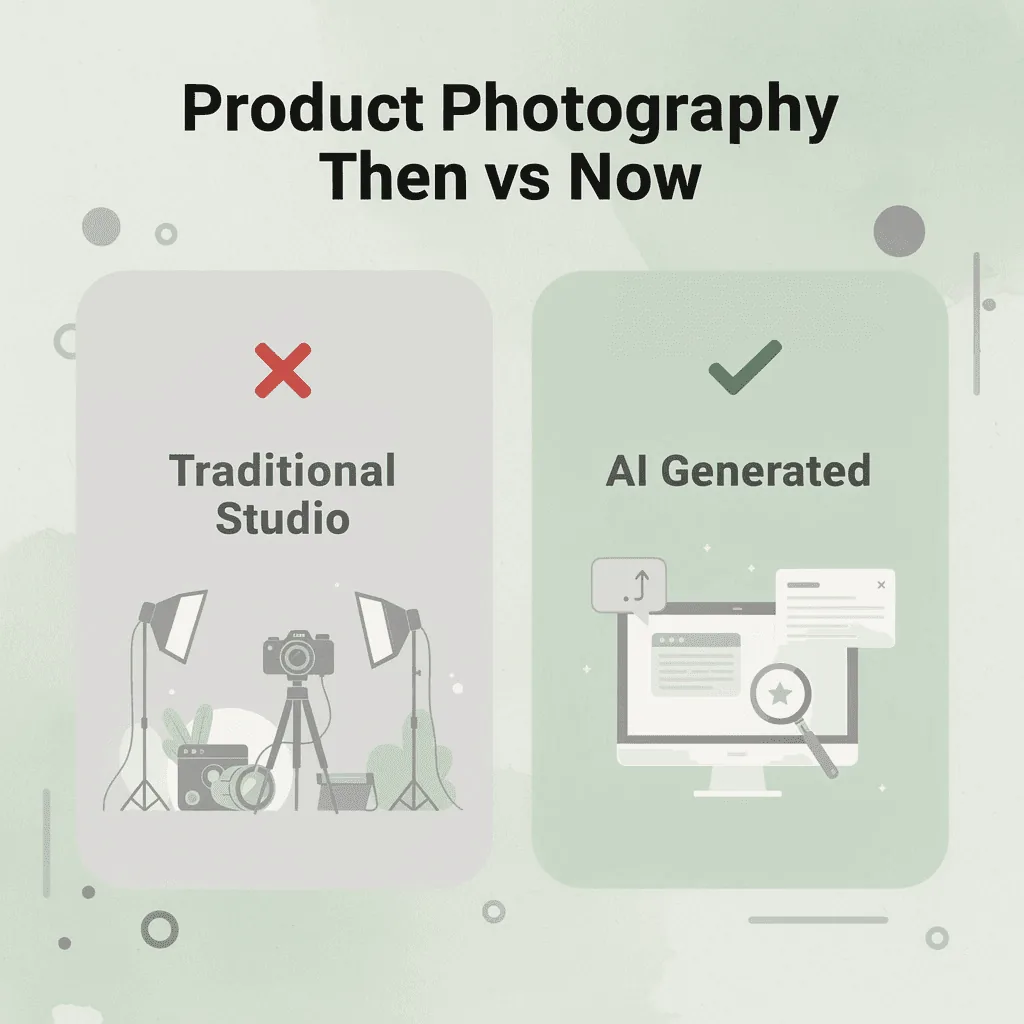
Caspa helps ecommerce brands overcome these challenges by making it easier to create professional product images at scale. One capability is AI product photography, allowing brands to generate high-quality product visuals without relying on traditional photoshoots, saving both time and production costs across the content workflow.
🎯 Key Point: AI product photography removes the dependency on studios, models, and editing teams, giving brands the ability to produce polished, campaign-ready visuals on demand.
💡 Tip: Brands with large or fast-growing product catalogs gain the most from Caspa's AI-powered approach, since efficiency advantages compound as the number of SKUs increases.
How does Caspa support model and lifestyle imagery without traditional photoshoots?
Caspa supports human model image generation, helping brands create realistic product visuals featuring models without the cost and logistics of traditional model photography. This benefits fashion, beauty, accessories, and lifestyle brands that need diverse visual content to showcase products in real-world contexts. Background replacement and customization let brands place products in different environments, seasonal settings, marketing campaigns, or lifestyle scenes without having to plan new photo shoots. This flexibility enables faster asset creation for specific platforms while maintaining visual consistency across channels.
What editing and asset creation tools does Caspa offer?
The platform includes tools for editing, enhancing, and upscaling images. These tools improve the product's picture quality and appearance. For brands working with older or low-resolution images, upscaling maximizes the value of existing assets while maintaining a polished look across websites, stores, and ads. Caspa lets brands create custom stock photography that matches their products and branding. Rather than using generic stock images that competitors might also use, businesses can produce unique pictures that better reflect their brand identity and marketing goals.
How does Caspa help ecommerce brands scale content production efficiently?
These capabilities accelerate content production. Brands can create, update, test, and launch visual assets in a fraction of the time it takes with traditional methods, enabling faster responses to market opportunities, support for new product launches, and fresher creative content.
By reducing dependence on traditional photoshoots, Caspa helps ecommerce teams avoid the costs and operational challenges of conventional content production. Brands can produce more imagery without proportionally increasing budgets, resources, or production timelines, enabling scalable content creation for dozens or thousands of SKUs.
As competition in ecommerce grows, the ability to create compelling product imagery quickly and efficiently becomes a significant advantage. Caspa gives brands the tools to produce professional visuals, support conversion-focused product pages, and scale content production as their business grows.
Get Product Photos that Increase Your Sales Today
Most brands fall short not because they don't try hard enough, but because they use production workflows that are too slow, too expensive, and too inconsistent to keep up with a growing catalog.
"Brands that can't keep pace with their catalog growth are handing sales directly to competitors who can." Ecommerce Content Strategy Insight
💡 Tip: If your visual production process is a bottleneck, it's not a creative problem. It's a workflow problem requiring a smarter solution.
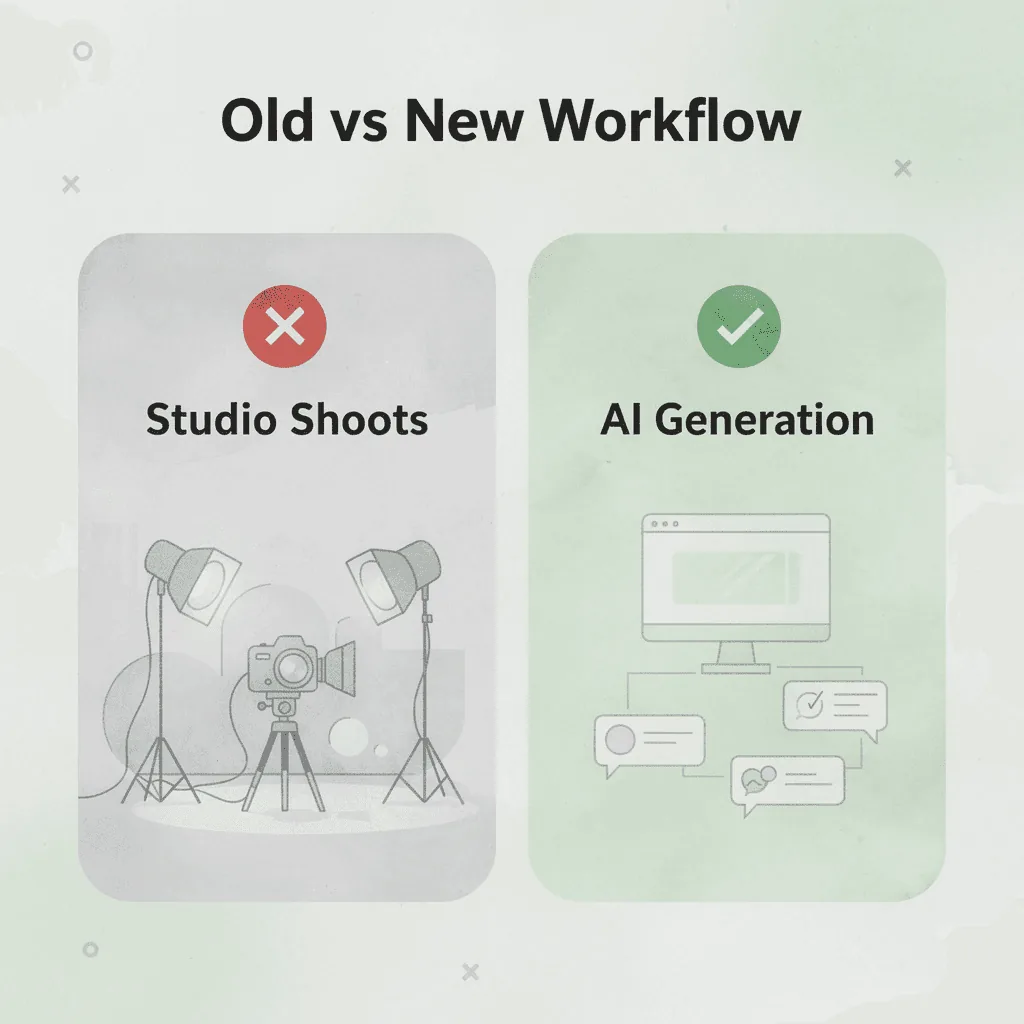
Product photography platforms like Caspa give ecommerce brands a faster way to get conversion-ready visuals, generating realistic product images, lifestyle scenes, and A+ content with diverse AI models, at a fraction of traditional studio costs. If your current process means waiting weeks for a photoshoot every time you launch a new SKU, that delay is actively costing you sales to competitors with faster content.
✅ Best Practice: Switch to an AI-powered product photography platform to eliminate the painful cycle of slow turnarounds, high costs, and inconsistent results across your catalog.
⚠️ Warning: Every week of delay on a new SKU launch is a week your competitors are capturing your potential customers, speed-to-market is a critical competitive advantage.
| Traditional Studio Workflow | AI Platform (Caspa) |
|---|---|
| Weeks of turnaround time | Fast generation, on demand |
| High studio & production costs | Fraction of traditional costs |
| Limited model diversity | Diverse AI models included |
| Inconsistent results across SKUs | Consistent, catalog-ready visuals |
| Bottleneck on every new launch | Scale with your growing catalog |